The Play!Shop headless commerce concept is a front-end design demo created to showcase how a modern, flexible shopping experience can be built on top of Sitecore OrderCloud. The project focuses on clean UI, scalable components, and clear user flows tailored for headless commerce architectures.
Inspired by Sitecore’s Play! Summit event, the visual direction emphasizes bold colors, strong contrasts, and clean layouts. Interactive elements and clear visual hierarchy create an energetic and active feel that aligns naturally with athletic and lifestyle brands. Throughout the project, I focused on intuitive navigation, strong product presentation, and mobile-first design principles to ensure a consistent experience across all breakpoints.
Log-in screens
Provide secure access to personalized features such as order history, saved addresses, and payment methods. Designed to reduce friction while reinforcing brand identity across all breakpoints.


Sign up / registration
Enables account creation for faster checkout, personalization, and long-term customer retention. Supports smooth onboarding without interrupting the shopping flow.


Content and recommendation listings
Surface relevant articles and product suggestions to support discovery and merchandising. Helps guide users through curated content alongside commercial offerings.

Quick preview product
Allows users to view key product details without leaving the current listing or category page. Speeds up decision-making and keeps browsing fast and uninterrupted.

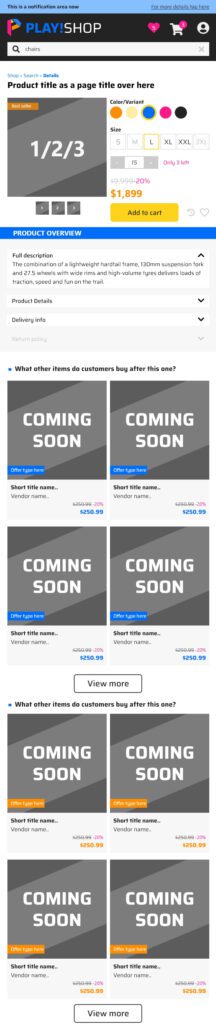
Product details
Present essential product information, imagery, and calls to action. This is the primary decision-making point before adding items to the cart.


Mini cart navigation
Allows users to review and manage selected items without leaving their current context. Reduces friction and supports faster purchasing decisions.


Category product listing page
Organizes products into scannable, filterable lists for efficient browsing. Supports merchandising rules and scalable catalog structures.




Search preview dropdown
Provides instant feedback and suggestions while typing. Improves discoverability and speeds up product finding.


User profile
Central hub for managing personal information and account settings. Essential for personalization and repeat purchases.


Address book
Stores and manages delivery addresses for faster checkout. Supports multiple addresses and default selections.


Create address
Allows users to add new delivery information when needed. Ensures flexibility without disrupting the checkout flow.


Full cart
Gives users a complete overview of selected items, quantities, and pricing. Acts as a final checkpoint before checkout.


Order history list
Displays past purchases for transparency and trust. Enables reordering and customer support use cases.


Order details
Provides a detailed view of individual orders, including items, pricing, and status. Essential for post-purchase clarity.


Pre-checkout
Prepares users for checkout by confirming intent and next steps. Helps reduce abandonment before payment.


Payment methods listing page
Displays saved payment options for quick selection. Supports secure and repeat transactions.


Edit payment method
Enables users to update existing payment information. Keeps account data accurate and up to date.


Create payment method
Allows users to add new payment options when needed. Supports flexibility across different payment preferences.


Guest checkout experience
Optimized flow for users without an account. Reduces barriers to purchase and increases conversion.


User checkout
Streamlined checkout for logged-in users using saved data. Focused on speed, clarity, and confidence.


Order review
Final confirmation step before placing an order. Ensures transparency and reduces purchase errors.



Thank you experience
Confirms successful order placement and reassures the user. Marks a clear and positive end to the purchase journey.


Although this is a static demo, every component is designed and structured for seamless integration with real-time data from Sitecore OrderCloud. Each page was built from scratch rather than using predefined templates, allowing full creative and technical flexibility. This approach highlights how custom front-end solutions can give teams complete control over design, performance, and scalability.
Ultimately, the Play!Shop demo demonstrates how a bespoke UI can support personalized, headless commerce experiences without relying on traditional monolithic platforms. Whether for a B2C storefront or a marketplace solution, the project illustrates the possibilities unlocked by modern front-end architecture combined with Sitecore OrderCloud.
For teams looking for inspiration or exploring how to visually present headless commerce, Play!Shop serves as a refined, practical, and production-ready example.